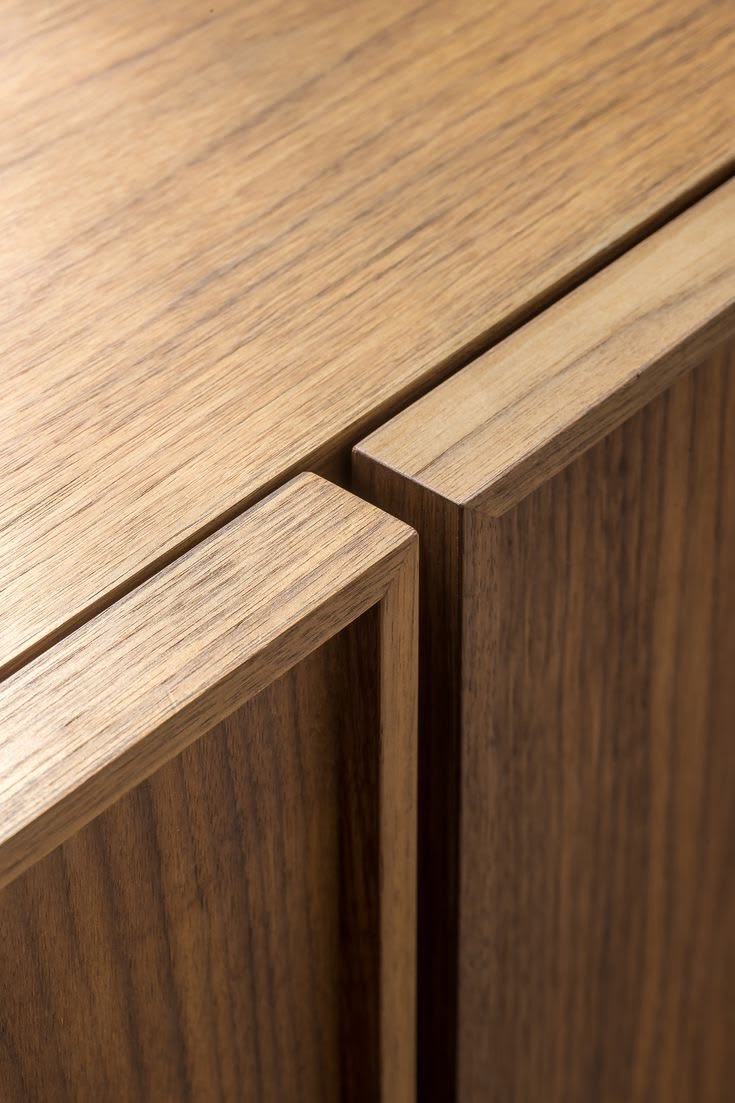
Dyed Natural Veneer as an Architectural Surface
Explore how natural veneer can move beyond cabinetry to create continuous walls, concealed doors, and integrated architectural elements with warmth and visual depth.
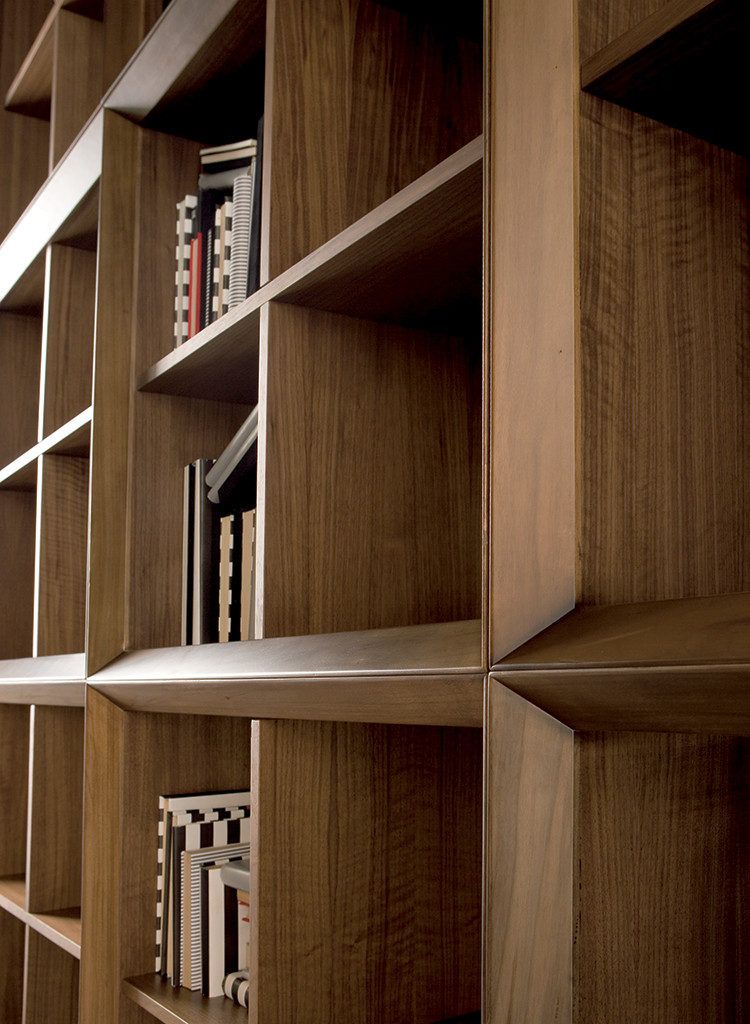
Dyed natural veneer expands the expressive range of real wood, combining the character of natural grain with greater control over colour, pattern and composition. Through careful selection, dyeing and veneer matching, it can become an architectural surface rather than simply a cabinet finish.
A Natural Material, with Greater Design Control
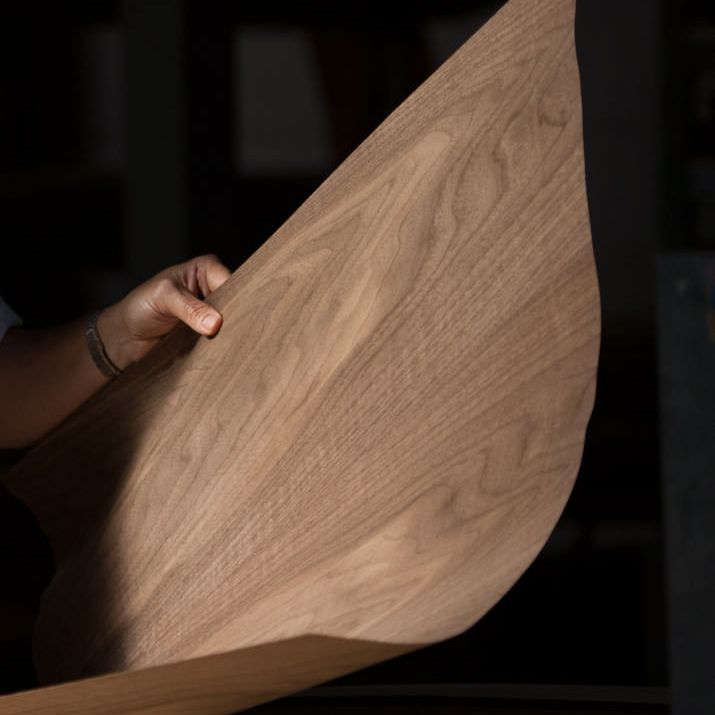
Every species of natural wood has its own grain, density and visual character. By applying controlled dyeing processes to selected natural veneers, the original texture of the wood can be retained while its colour is refined to suit a specific interior palette.
This creates a wider design range than relying only on the natural colour of a species. Light woods can be developed into deeper, more saturated tones, while figured veneers can be enhanced to reveal greater depth and movement.
The result remains visually rooted in natural wood, but with significantly more flexibility for bespoke interiors.
Grain, Figure and Composition
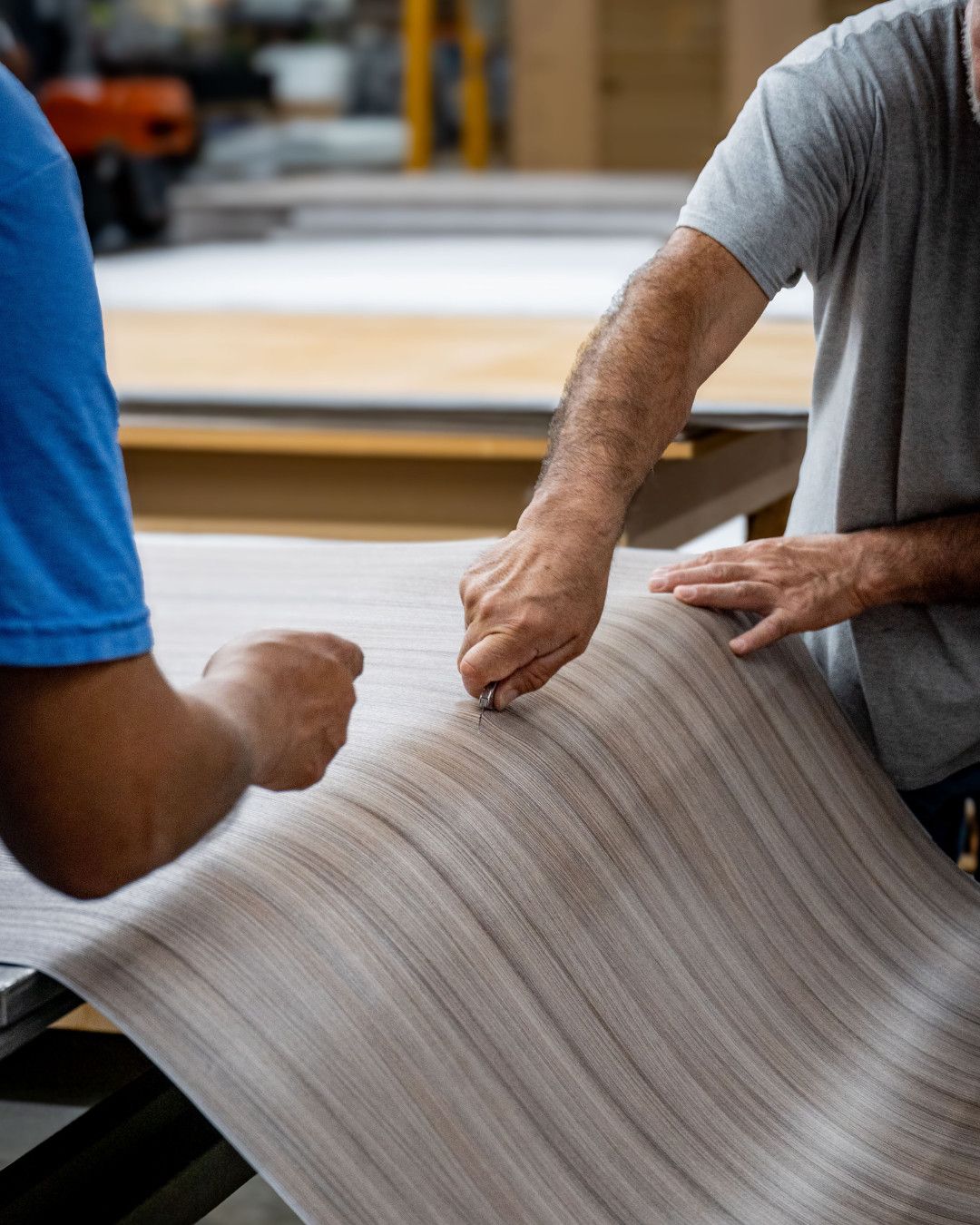
The quality of veneer work depends not only on the species, but also on how the veneer is selected and composed.
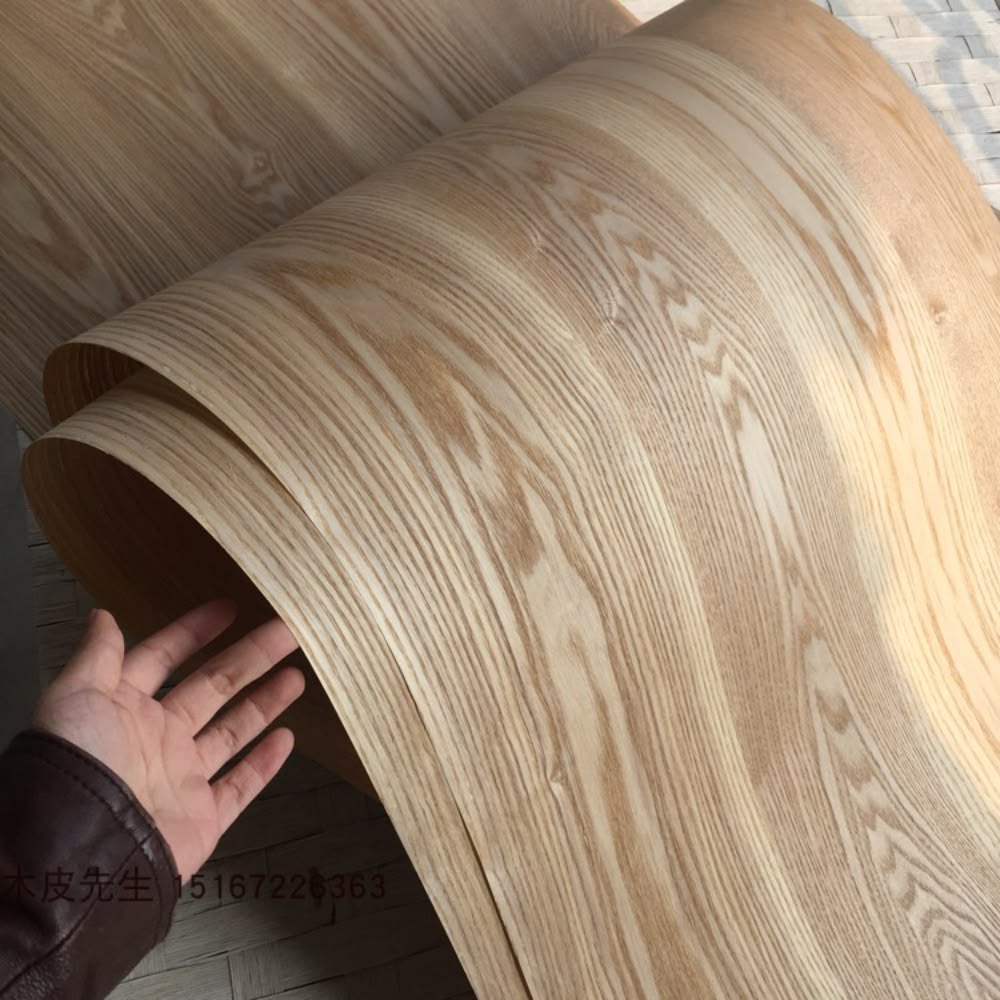
Straight-grain veneers can create calm, continuous architectural surfaces, while figured veneers introduce movement, depth and a more decorative character. Selected veneers with pronounced figure or visual movement can be used as focal surfaces where the grain itself becomes part of the design.
Veneers can also be arranged through techniques such as:
- Book matching — mirrored veneer leaves create symmetrical patterns.
- Slip matching — consecutive leaves create a more continuous grain direction.
- Panel sequencing — veneer sheets are planned across multiple doors or wall panels to maintain visual continuity.
- Decorative composition — veneers can be cut and assembled into geometric, radial or custom patterns.
- Figured veneer selection — highly expressive natural grain can be used to create depth and visual movement.
These techniques allow veneer to move beyond a conventional wood finish and become part of the architectural composition of the room.
Designed Across the Whole Surface
In high-end millwork, veneer is most effective when it is considered across the entire elevation rather than panel by panel.
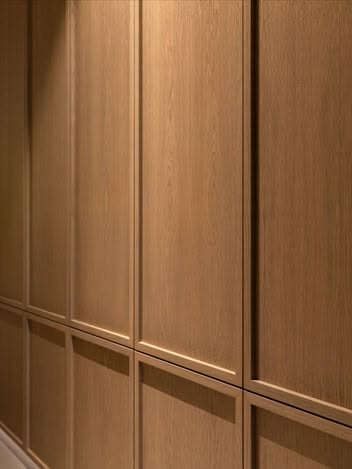
Grain direction, panel proportions, door joints, reveals and adjacent materials should be resolved together. A continuous veneer surface may extend across cabinetry, wall panels and concealed doors, allowing functional elements to visually disappear into the architecture.
The detailing around edges and transitions is equally important. Metal trims, stone surfaces, integrated lighting and recessed reveals can all be coordinated with the veneer to create a more refined composition.
Applications
Dyed and figured natural veneers can be used across a wide range of bespoke millwork applications, including:
- full-height wall systems
- concealed doors
- wardrobes and cabinetry
- feature walls
- bars and wine rooms
- integrated furniture
- vanities
- libraries and studies
- decorative wall panels
The objective is not simply to select a wood colour, but to design the grain, tone and composition as part of the space itself.
Material Character, Precisely Controlled
Natural veneer retains the variation and depth that make real wood distinctive. Dyeing does not remove that character; when carefully executed, it provides greater control over how the material relates to the surrounding architecture.
Combined with thoughtful veneer selection, matching and fabrication, dyed natural veneer offers a balance between natural material expression and precise design control—making it particularly suited to bespoke architectural millwork.